
 Italiano
 Afrikaans
 Shqip
Shqip العربية
 Հայերեն
 Azərbaycan dili
 Euskara
 Беларуская мова
 Български
 Català
 简体中文
简体中文 繁體中文
繁體中文 Hrvatski
 Čeština
 Dansk
Dansk Nederlands
 English
 Eesti
Eesti Filipino
 Suomi
Suomi Français
 Galego
 ქართული
 Deutsch
 Ελληνικά
 Kreyol ayisyen
 עִבְרִית
 हिन्दी
 Magyar
 Íslenska
 Bahasa Indonesia
 Gaelige
 日本語
日本語 한국어
한국어 Latviešu valoda
 Lietuvių kalba
 Македонски јазик
 Bahasa Melayu
 Maltese
 Norsk bokmål
 فارسی
فارسی Polski
 Português
 Română
 Русский
 Српски језик
 Slovenčina
 Slovenščina
 Español
 Kiswahili
 Svenska
 ไทย
ไทย Türkçe
 Українська
 اردو
اردو Tiếng Việt
 Cymraeg
 יידיש
יידיש

Lifting of compulsory quarantine requirement on arrival in Hong Kong
The world's freest economy
Hong Kong ranked fourth in Global Financial Centres Index
Hong Kong’s Science and Technology Parks - Fighting Alzheimer's disease
Hong Kong Rugby Sevens to be held in November
Lifting of compulsory quarantine requirement on arrival at Hong Kong
Starting September 26, compulsory quarantine requirement for inbound persons from overseas places or Taiwan is being lifted. The latest boarding requirements and quarantine arrangements for inbound persons from overseas places or Taiwan are as follows:
- Presentation of a negative nucleic acid testing report prior to boarding will no longer be required. Instead, a declaration of the negative result of a self-arranged rapid antigen test (RAT) conducted within 24 hours prior to the scheduled time of departure should be made via the online Health & Quarantine Information Declaration of the Department of Health.
- Boarding requirement of having completed vaccination for Hong Kong residents will be lifted. Non-Hong Kong residents aged 12 or above will still be required to be fully vaccinated or have obtained a medical exemption certificate before they are allowed to board a flight for Hong Kong.
- "Test-and-go" arrangement will be implemented at the Hong Kong International Airport, i.e. inbound persons will not be required to wait for the test result at the airport after undergoing specimen collection for the nucleic acid test. They can take public transport or self-arranged transport to return to their home or their hotel of choice.
- Quarantine arrangement upon arrival in Hong Kong will be changed to "0+3", i.e. no compulsory quarantine will be required. There will be three days of medical surveillance during which inbound persons are free to go out but are obliged to comply with Amber Code restrictions under the Vaccine Pass, followed by a four-day self-monitoring period, making it a 7-day observation period in total.
- Nucleic acid tests at community testing centres, mobile testing stations or other recognised institutions on Day 2, Day 4 and Day 6 (the day of arrival is Day 0) will be required upon arrival at Hong Kong, supplemented by daily RATs from Day 1 to Day 7.
- For inbound persons who are tested positive by nucleic acid tests or RATs, their Vaccine Pass will be converted to a Red Code. Their isolation arrangements will be aligned with that for local cases.
https://www.coronavirus.gov.
The world's freest economy
Hong Kong remains the world’s freest economy in the Economic Freedom of the World 2022 Annual Report released by the Fraser Institute in early September 2022.
Among the five areas of assessment in the Report, Hong Kong continued to rank top in “Freedom to Trade Internationally” and “Regulation”. Our distinctive edges are kept under the “One Country, Two Systems” principle, including the rule of law, free flow of capital, a free trade and investment regime and an efficient and clean government.
Hong Kong remains an ideal place for doing business with our low, simple and competitive tax system, open business environment, world-class infrastructure and multicultural talent pool.
https://www.info.gov.hk/gia/
Hong Kong ranked fourth in Global Financial Centres Index
Hong Kong ranked fourth globally in the Global Financial Centres Index (GFCI) 32 Report published on September 22 by the Z/Yen from the United Kingdom and the China Development Institute from Shenzhen.
Hong Kong saw an increase in the overall rating and our ranking in the area of financial sector development leapt by four places as compared with the previous issue. At the same time, the report pointed out that as compared to the assessment by financial industry practitioners from other major financial centres on the prospects of the cities in which they were based, practitioners based in Hong Kong were the most confident about the future competitiveness of Hong Kong as an international financial centre.
The HKSAR Government has been making good use of national policies and Hong Kong's institutional advantages under "one country, two systems", including a fine tradition of rule of law, a market-oriented and internationalised business environment, coupled with robust infrastructure support, internationally-aligned regulatory regimes, a full range of financial products, and free flow of information and capital, to strengthen Hong Kong's competitiveness as a leading global financial centre.
https://www.info.gov.hk/gia/
Hong Kong’s Science and Technology Parks - Fighting Alzheimer's disease
Hong Kong’s start-up scene is combining innovation and entrepreneurial spirit with universities and laboratories, coupled with the industrial might of the Guangdong-Hong Kong-Macao Greater Bay Area (GBA).
The Hong Kong Science and Technology Parks Corporation is now 20 years old, and has over 1000 companies. A common problem for researchers and companies around the world is having to work with limited resources. The Hong Kong Science Park provides the necessary infrastructure for innovation in technology development, including electronic labs, biomedical labs, data, robotics and A.I. virtual labs. People can come in without needing to buy all this expensive equipment and can start doing their technology, research and development right away. The Science Park environment also fosters synergy between biotech start-ups.
At the Hong Kong Science Park research clusters called InnoHK are developing global collaboration. Health@InnoHK> focuses on healthcare and AIR@InnoHK> on AI and robotics technologies.
Within Health@InnoHK, the Hong Kong Centre for Neurodegenerative Diseases is currently working in collaboration with University College of London and Stanford University. One project is developing a blood-based biomarker test for Alzheimer’s disease.
AIR@InnoHK, works with people such as Helen Meng at the Centre for Perceptual and Interactive Intelligence, part of the Chinese University of Hong Kong. They collaborate with MIT and others in developing wearable electronics which can be used for rehabilitation or sports training for athletes.
The GBA, with its 80 million population within a one or two hour travelling zone, provides a massive market for products. Hong Kong can also play a role in bringing out technology from China into the Southeast Asia area.
See the full story on Euronews: https://www.euronews.com/2022/
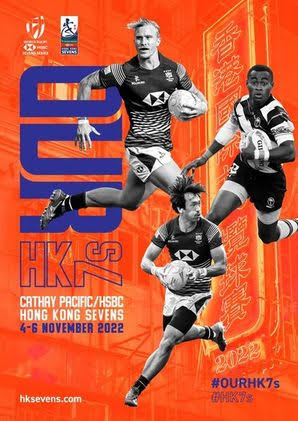
Hong Kong Rugby Sevens to be held in November
Firmly established as the world’s premier event of its kind and one of the most popular annual sporting events in Asia, the Hong Kong Sevens attracts some of the world’s greatest rugby players and thousands of fans from every corner of the globe to the magnificent Hong Kong Stadium every year. This will be the first time the event is held since the start of the pandemic.
https://hksevens.com/
- Hong Kong Economic and Trade Office, Rue d'Arlon 118, 1040 Brussels, Tel + 32 2775 00 88, www.hongkong-eu.org. Any comm