
L’azienda Villa La Ripa, che recentemente ha sperimentato il nuovo sistema di vinificazione e gestione dei raspi brevettato dall’enologo Alessio Bandinelli, è ubicata sul colle di Pecognano ad Arezzo, dove un tempo sorgeva una grande villa etrusco-romana.
Il primo proprietario dell’antica villa fu Marco Peconio nel II sec. D.C. Il nome deriva da Pacho, dio del vino, cioè Bacco in etrusco; un segno evidente di quanto il territorio sia da sempre legato alla coltivazione della vigna. Nel Medio Evo la proprietà passò alla famiglia Ricoceri che innalzò un palazzo fortificato con la torre ancora oggi visibile. La villa padronale attuale, sede dell’azienda, fu costruita in pieno Rinascimento dai Gualtieri, importante casato di poeti, cardinali e viticoltori che la intestarono all’Ordine di Santo Stefano.
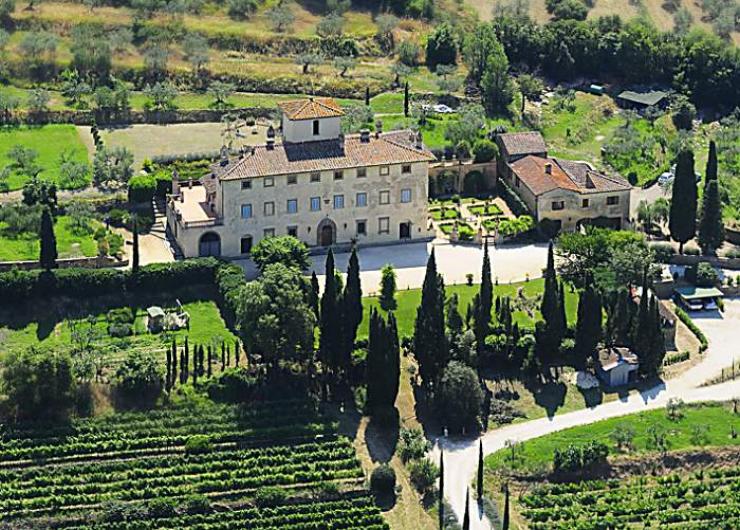
Nell'Ottocento, in seguito all'invasione di Arezzo da parte di Napoleone, la villa fu sequestrata e messa all'asta con il successivo acquisto da parte degli Ubertini, nobile famiglia aretina il cui più noto esponente fu Guglielmo degli Ubertini, il condottiero degli Aretini nella grande battaglia contro Firenze: Campaldino.
All'inizio del secolo passato ci furono i Bucchi, che svilupparono ulteriormente la coltura dell'olio e della vite, piantando la più vecchia delle vigne attualmente presenti in azienda. Il casale fu poi acquistato dalla famiglia Luzzi, gli attuali proprietari.
Il Dottor Saverio Luzzi, noto Neurologo, ha riportato la proprietà agli antichi splendori tramite un’accurata e minuziosa ristrutturazione degli ambienti e ha deciso di portare avanti la produzione del vino puntando però sull’alta qualità del prodotto.
La zona è classificata come Chianti Aretino costituendo eccellenti terreni per la produzione di olio extra vergine d’oliva e vini pregiati e pluripremiati quali Peconio, Tiratari (ottenuto da uve Sangiovese e Syrah), Psyco, Spaziolibero (rosato da Sangiovese e Syrah) e Namastè (ottenuto da uva Malvasia Bianca e Trebbiano Toscano provenienti dalle storiche selezioni massali di Villa la Ripa). I vitigni coltivati sono: Sangiovese, Cabernet Sauvignon, Merlot, Syrah, Malvasia e Trebbiano curati con amore e passione nel pieno rispetto della natura e della sostenibilità ambientale.
Tutte le bottiglie sono parlanti, cioè hanno le etichette che sfruttano la tecnologia NFC. Una tecnologia assolutamente innovativa adottata da Villa La Ripa che ha rinnovato le proprie bottiglie di vino lanciando un chatbot che racconta il vino, raccoglie contatti automatici e azzera la distanza fra cantina e cliente finale.
L’idea sfrutta la tecnologia NFC (Near Field Communication) derivata dai sistemi di pagamento contactless dove un assistente virtuale è precedentemente educato a rispondere alle domande ricorrenti poste dai clienti. Le bottiglie di Villa La Ripa, quindi, prevedono un Qr Code e un adesivo NFC che vengono attivati via smartphone e dove l’assistente virtuale conversa direttamente nella chat del cellulare della persona interessata senza la necessità di scaricare ulteriori applicazioni.
Abbiamo avuto il piacere di assaggiare alcune etichette dell’azienda aretina e queste sono le nostre impressioni.
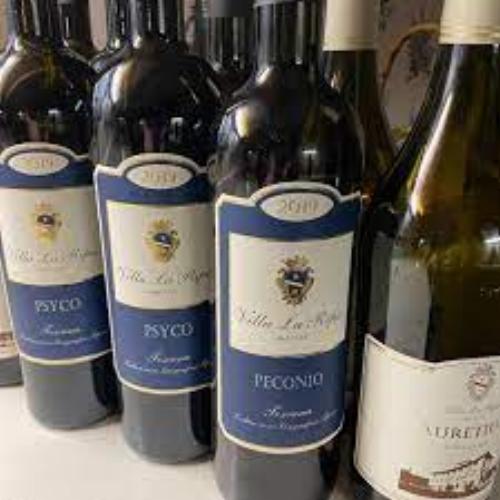
AURETIUM IGT 2021
Bottiglie prodotte: 1.000. Prezzo di vendita al pubblico € 28,00
Vino giallo ottenuto da Trebbiano e Malvasia, tradizionali uve toscane che riescono ad esprimere un vino profumato ed intrigante dal colore giallo oro brillante e luminoso. Sfoggia un naso fine, intenso e riccamente fruttato nel quale si riconoscono nitidamente le note fragranti della mela Golden, della pera e della pesca nettarina; una lieve rotazione del calice permette al suo quadro olfattivo di arricchirsi dei sentori floreali dell’acacia oltre che dei profumi delle erbe officinali tra le quali è facile riconoscere il timo e la maggiorana.
Al palato, spicca per la ricchezza del corpo e l’altrettanto importante morbidezza che avvolgono e riempiono il palato, donando così equilibrio e armonia all’insieme. La nota salmastra, marina, salata è incontrastabile, in un sorso slanciato e verticale. La sapidità e la vivida freschezza ne fanno un vino dalla beva facile, di grande piacevolezza che in virtù della piacevole chiusara lievemente ammandorlata e dell’adeguata persistenza, ci offre un sorso snello ma di carattere. Auretium ha tutte le carte in regola per essere un grande Giallo da invecchiamento.
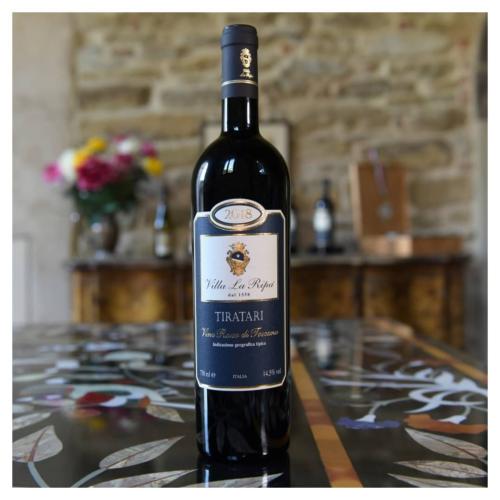
TIRATARI IGT 2019
Bottiglie prodotte: 2.000. Prezzo di vendita al pubblico € 24,00
Vino di alta classe tipicamente toscano ottenuto da uve Sangiovese (75%) e Syrah (25%). 12 mesi in barriques di rovere francese di Allier e 12 mesi in bottiglia.
Questo nome nasce al momento dell'acquisto della villa e delle vigne, grazie alla figlia del proprietario. In quei giorni la bimba stava leggendo una favola su un paese dei sogni dove tutto era bello e buono; questo paese si chiamava Tiratari. Nel momento in cui venne portata a vedere la nuova casa subito disse: "Ma questo è Tiratari!!". Da quel giorno il nome del vino fu deciso.
Equilibrio questa la parola chiave che ci permette di comprendere l’espressione aperta e solare di questo vino. Questo sangiovese dimostra di possedere eleganza e facilità di beva, o meglio scorrevolezza gustativa, ampliata, allargata, compensata dall’apporto in piccola percentuale, di uva internazionale.
Buona la trasparenza e la veste color rubino intenso che risalta nell’ottima vivacità del colore, naso di media ampiezza ma di ottima definizione con abbondante frutto rosso e nero in evidenza, con intensi, fini e croccanti sentori fruttati di marasca e ribes rosso affiancati da quelli floreali della violetta. Una breve attesa e una leggera rotazione del bicchiere permettono al suo bouquet di aprirsi ulteriormente, offrendoci note garbatamente tostate di cioccolato dolce oltre a sfumature di peperone e accenni di una integrata e suadente speziatura sempre rotonda mai aggressiva che ne completa il già ampio panorama olfattivo.
Ma è il palato che alza lo spessore del Tiratari e qui ritorna il concetto di equilibrio, centrato nella giusta espressione qualitativa delle componenti gustative, una tessitura tannica di ottima fattura, freschezza che regala un sorso brioso e lascia un ricordo positivo in chiusura di palato. Nel complesso, un vino dal sorso ricco, succoso, potente e dalla grande persistenza.
FONTE DELL’ANGELO CHIANTI DOCG 2018
Bottiglie prodotte: 12.000. Prezzo di vendita al pubblico € 18,00
Colore rosso rubino intenso, piuttosto cupo. Al naso si avvertono decisi i profumi di viola mammola e gelsomino, con sentori fruttati di mora, ciliegia e mirtillo macerati, pepe nero e un sottofondo di goudron.
Al sorso è caldo, secco, fresco, sapido e leggermente tannico, con netto fondo amarognolo e note fruttata, speziata e goudron. Ben fatto e stimolante, buona persistenza. È un Chianti “tradizionale” da apprezzare in gioventù, e assaporare con la cucina di ogni giorno.
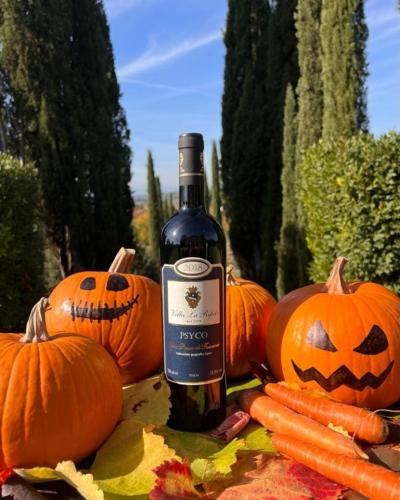
PSYCO IGT 2019
Bottiglie prodotte: 5.000. Prezzo di vendita al pubblico € 28,00
Questo nome esprime una dedica fatta dal proprietario dell'azienda, neurologo, alla sua professione. Vino ottenuto da un sapiente assemblaggio alla pari di Cabernet Sauvignon e Sangiovese. Psyco è affinato in botti di rovere da 225 e 500 litri per 12 mesi; prima dell’immissione al consumo trascorre 12 mesi in bottiglia. È prodotto in selezione limitata.
Alla vista è di un bel rosso rubino intenso e brillate. Al naso si sente il profumo della frutta rossa, amarena e prugna, della viola selvatica, leggermente del pepe e si sente il profumo lasciato dall’affinamento in rovere.
In bocca tannino evidente e ricco, presente ma senza asprezza, corposo e potente, si allarga e si distende con bel finale tra cedro e amarena e tabacco che accompagna tutto il sorso. Il buon tannino e l’acidità mascherano corpo e struttura che pure non sono da poco, la gradazione alcolica è di 14,5% vol.
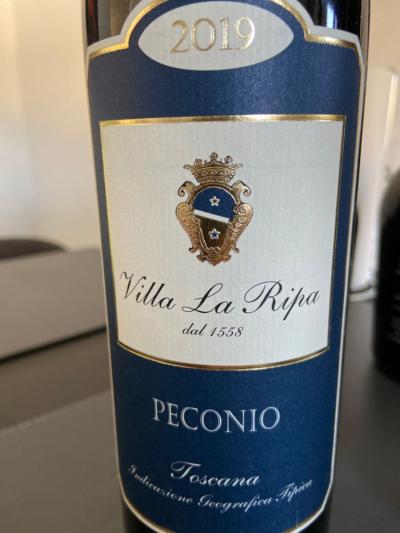
PECONIO IGT 2019
Bottiglie prodotte: 5.000. Prezzo di vendita al pubblico € 20,00
Un Sangiovese 100% dedicato a Marco Peconio, l’antico proprietario di Villa la Ripa al tempo degli Etruschi e dei Romani. Peconio è affinato in botti di rovere di secondo passaggio da 225 e 500 litri per 6 mesi. Dopo filtrazione leggera e imbottigliamento resta nelle cantine a perfezionarsi per altri 6 mesi.
Colore rosso rubino di buona intensità. Al naso ha profumi di frutta fresca come la ciliegia e la prugna rossa. Seguono i frutti di bosco ed alcune note floreali di viola e genericamente di sottobosco. Lo spettro olfattivo si chiude con sfumature di spezie dolci come vaniglia e cannella. Al palato ha una buona struttura con acidità e tannini in bello spolvero. I secondi in particolare sono setosi e non pungenti. Ottima la sostanza con spessore e grassezza del sorso, così da risultare di buona bevibilità, l’acidità soprattutto impressiona e ci fa pensare come sia bello averlo a tavola. Persistente il ricordo che lascia, nuotando tra aromi di ribes, fiori e spezie.
Eccellente interpretazione di Sangiovese, supera molti altri toscani decisamente più celebri e costosi.
Villa La Ripa S.r.l - Località Antria, 38 52100 Arezzo; Cell. (+39) 335 1003351; 335 8152531; Questo indirizzo email è protetto dagli spambots. È necessario abilitare JavaScript per vederlo. - https://www.villalaripa.it/it/
Mauro Maccario
ENGLISH VERSION
VILLA LA RIPA THE HIDDEN GEM OF TUSCANY
The Villa La Ripa company, which recently experimented with the new vinification and stem management system patented by the oenologist Alessio Bandinelli, is located on the Pecognano hill in Arezzo , where a large Etruscan-Roman villa once stood.
The first owner of the ancient villa was Marco Peconio in the 2nd century. AD The name derives from Pacho, god of wine, that is Bacchus in Etruscan; a clear sign of how much the territory has always been linked to the cultivation of the vineyard. In the Middle Ages the property passed to the Ricoceri family who built a fortified palace with the tower still visible today. The current manor house, headquarters of the company, was built in the middle of the Renaissance by the Gualtieri, an important family of poets, cardinals and winegrowers who made it out to the Order of Santo Stefano.
In the 19th century, following the invasion of Arezzo by Napoleon, the villa was seized and put up for auction with the subsequent purchase by the Ubertinis, a noble family from Arezzo whose best known exponent was Guglielmo degli Ubertini, the leader of the Aretini in the great battle against Florence: Campaldino.
At the beginning of the past century there were the Bucchis, who further developed the cultivation of oil and vines, planting the oldest of the vineyards currently present on the farm. The farmhouse was then purchased by the Luzzi family, the current owners.
Doctor Saverio Luzzi, a well-known neurologist, has brought the property back to its former glory through an accurate and meticulous restructuring of the rooms and has decided to continue the production of wine, however, focusing on the high quality of the product.
The area is classified as Chianti Aretino constituting excellent lands for the production of extra virgin olive oil and prized and award-winning wines such as Peconio, Tiratari (obtained from Sangiovese and Syrah grapes), Psyco, Spaziolibero (rosé from Sangiovese and Syrah) and Namastè (obtained from Malvasia Bianca and Trebbiano Toscano grapes from the historic massal selections of Villa la Ripa). The cultivated vines are: Sangiovese, Cabernet Sauvignon, Merlot, Syrah, Malvasia and Trebbiano treated with love and passion in full respect of nature and environmental sustainability.
All the bottles are talking, i.e. they have labels that use NFC technology. An absolutely innovative technology adopted by Villa La Ripa which has renewed its bottles of wine by launching a chatbot that tells the story of the wine, collects automatic contacts and resets the distance between the cellar and the end customer.
The idea takes advantage of NFC (Near Field Communication) technology derived from contactless payment systems where a virtual assistant is previously trained to answer recurring questions posed by customers. The bottles of Villa La Ripa, therefore, have a QR Code and an NFC sticker which are activated via smartphone and where the virtual assistant converses directly in the cell phone chat of the person concerned without the need to download additional applications.
We had the pleasure of tasting some of the company's labels from Arezzo and these are our impressions.
AURETIUM IGT 2021
Bottles produced: 1,000. Sale price to the public € 28.00
Yellow wine obtained from Trebbiano and Malvasia, traditional Tuscan grapes that manage to express a fragrant and intriguing wine with a bright and luminous golden yellow color. It boasts a fine, intense and richly fruity nose in which the fragrant notes of Golden apple, pear and nectarine can be clearly recognized; a slight rotation of the glass allows its olfactory profile to be enriched by the floral scents of acacia as well as the aromas of medicinal herbs among which it is easy to recognize thyme and marjoram.
On the palate, it stands out for the richness of the body and the equally important softness that envelop and fill the palate, thus giving balance and harmony to the whole. The brackish, marine, salty note is undeniable, in a slender and vertical sip. The sapidity and vivid freshness make it an easy-drinking wine, of great pleasure which, by virtue of the pleasant, slightly almondy finish and adequate persistence, offers us a slim but characterful sip. Auretium has all the credentials to be a great Aging Yellow.
TIRATARI IGT 2019
Bottles produced: 2,000. Sale price to the public € 24.00
Typically Tuscan high-class wine obtained from Sangiovese (75%) and Syrah (25%) grapes. 12 months in Allier French oak barriques and 12 months in the bottle.
This name was born when the villa and the vineyards were purchased, thanks to the owner's daughter. In those days the little girl was reading a fairy tale about a dreamland where everything was beautiful and good; this town was called Tiratari. The moment she was taken to see the new house she immediately said: "But this is Tiratari !!". From that day on, the name of the wine was decided.
Balance this is the key word that allows us to understand the open and sunny expression of this wine. This Sangiovese proves to possess elegance and ease of drinking, or rather gustatory fluidity, expanded, enlarged, compensated by the small percentage contribution of international grapes.
Good transparency and intense ruby color that stands out in the excellent vivacity of the color, medium-sized nose but of excellent definition with abundant red and black fruit in evidence, with intense, fine and crunchy fruity hints of cherry and red currant flanked by the floral ones of the violet. A short wait and a slight rotation of the glass allow its bouquet to open up further, offering us gently toasted notes of sweet chocolate as well as nuances of pepper and hints of an integrated and persuasive spiciness that is always round and never aggressive, which completes the already wide olfactory panorama.
But it is the palate that raises the thickness of the Tiratari and here the concept of balance returns, centered on the right qualitative expression of the gustatory components, a tannic texture of excellent workmanship, freshness that gives a lively sip and leaves a positive memory on the palate. Overall, a wine with a rich, juicy, powerful sip and great persistence.
FONTE DELL'ANGELO CHIANTI DOCG 2018
Bottles produced: 12,000. Sale price to the public €18.00
Intense ruby red colour, rather dark. On the nose there are decisive aromas of violet and jasmine, with fruity hints of blackberry, cherry and macerated blueberry, black pepper and a background of goudron.
On the palate it is warm, dry, fresh, sapid and slightly tannic, with a clear bitter aftertaste and fruity, spicy and tar notes. Well done and stimulating, good persistence. It is a "traditional" Chianti to be appreciated in youth, and savored with everyday cooking.
PSYCO IGT 2019
Bottles produced: 5,000. Sale price to the public € 28.00
This name expresses a dedication made by the owner of the company, a neurologist, to his profession. Wine obtained from a skilful assembly on a par with Cabernet Sauvignon and Sangiovese. Psycho is aged in 225 and 500 liter oak barrels for 12 months; before being released for consumption, it spends 12 months in the bottle. It is produced in limited selection.
At sight it has a beautiful intense and brilliant ruby red. The nose has the scent of red fruit, black cherry and plum, wild violet, slightly pepper and the scent left by the aging in oak.
In the mouth evident and rich tannin, present but without harshness, full-bodied and powerful, it widens and relaxes with a nice finish between cedar and black cherry and tobacco that accompanies the whole sip. The good tannins and acidity mask the body and structure which are no small thing, the alcohol content is 14.5% vol.
PECONIO IGT 2019
Bottles produced: 5,000. Sale price to the public € 20.00
A 100% Sangiovese dedicated to Marco Peconio, the ancient owner of Villa la Ripa at the time of the Etruscans and Romans. Peconio is aged in second passage oak barrels of 225 and 500 liters for 6 months. After light filtration and bottling, it remains in the cellars to perfect itself for another 6 months.
Ruby red color of good intensity. The nose has aromas of fresh fruit such as cherry and red plum. Followed by wild berries and some floral notes of violet and generically of undergrowth. The olfactory spectrum ends with nuances of sweet spices such as vanilla and cinnamon. On the palate it has a good structure with acidity and nicely sprinkled tannins. The latter in particular are silky and not pungent. Excellent substance with thickness and fatness of the sip, so as to be drinkable, the acidity above all impresses and makes us think how nice it is to have it at the table. The memory it leaves is persistent, swimming among aromas of currants, flowers and spices.
An excellent interpretation of Sangiovese, it surpasses many other decidedly more famous and expensive Tuscans.